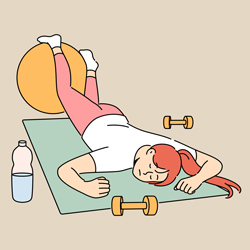
 Regular exercise is a vital part of staying healthy. But, if
you aren't careful, you can take your workouts or sports training to extremes.
When you do, you put yourself at risk for REDs—relative energy deficiency in
sport.
Regular exercise is a vital part of staying healthy. But, if
you aren't careful, you can take your workouts or sports training to extremes.
When you do, you put yourself at risk for REDs—relative energy deficiency in
sport.
REDs may occur when your calorie intake falls short of the
energy needed for your training. In other words, if you work out all the time
and don't eat enough to fuel your body, you create an energy deficiency.
Many people don't do this on purpose—they might be trying to
maximize their athletic performance or achieve specific weight-loss goals.
Others may intentionally cut way back on food, train excessively or both.
Whether created intentionally or accidentally, REDs can cause serious health
problems over time.
The physical and mental toll of REDs
Once called the female athlete triad because of its
prevalence among women and girls, this condition was renamed REDs by experts to
better reflect the fact that people of all genders can experience health
problems from extreme exercise and strict eating.
In the short term, people with REDs may often feel exhausted
or drained of energy. Long-term, people who consistently restrict their food
intake or exercise excessively may develop disordered eating. They may engage
in binge eating, fasting, skipping meals, avoiding certain foods, or using diet
pills or laxatives to drop pounds.
These behaviors can prevent them from getting enough
nutrients.
Other health problems may follow, though signs and symptoms
may not be obvious. And some may differ based on a person's biology. These
conditions include:
• Irregular or missed periods.
• Low bone density.
• Depression.
• Frequent illnesses, such as colds.
• Repeated injuries, such as stress fractures of the bones.
• Sleep problems.
• Anemia, or low iron levels.
• Obsessive thoughts and behavior focused on appearance,
foods and training.
• Low sex drive.
• Weight loss.
Get your body back in balance
Striking a healthy balance when it comes to eating and
exercising is key to preventing and treating REDs.
If you're worried about how you eat or exercise, tell your Watson Clinic
Family Medicine or Internal Medicine specialist. They may suggest a healthy,
balanced diet and a realistic exercise plan that includes rest. Call
863-680-7190 to schedule an appointment.
Watson Clinic’s Dietary Counseling and Medical
Nutritional Therapy department can offer additional insights. These specialists
are available by physician referral.
Sources: Academy of Nutrition and Dietetics; American
Academy of Orthopedic Surgeons; American College of Sports Medicine; National
Eating Disorders Association