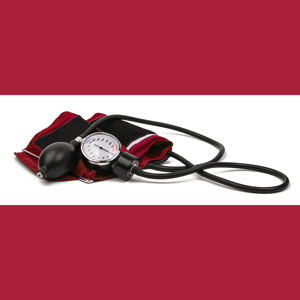
Want to take a more active role in your own health? Monitoring your blood pressure at home is a good start. After all, nearly 50% of all American adults who have high blood pressure, or hypertension, don’t even know it.
But beware of seemingly minor missteps that can make your blood pressure reading inaccurate. Here are five of the most common monitoring mistakes and how to avoid them:
1. An inaccurate device.
There are a lot of options available for home blood pressure monitoring kits. But even if a company claims its device is cleared by the U.S. Food and Drug Administration (FDA), that doesn't mean it's the best choice, because they don’t actually regulate the accuracy of these devices.
Ask your doctor which type of blood pressure measurement device you should use. After you buy a device, it's a good idea to have your doctor test it. Then bring it back in to be checked every year, to ensure that its readings are still accurate.
2. The wrong cuff size.
The arm-cuff on your blood pressure monitoring kit must be sized correctly. If your arm is larger or thinner than the cuff was built for, you may not get good results. Ask your doctor or pharmacist to help you select the correct size. The cuff should fit snugly around your upper arm. Wrap the cuff around your bare skin, not your sleeve. Clothing can throw off a blood pressure reading by up to 50 mm Hg.
3. Rushing the reading.
When life gets busy, it might be tempting to take a quick reading in the midst of your daily hustle. But your activities, state of mind, and what you eat and drink can all affect your results. Even talking and active listening can raise your blood pressure.
Before your reading, avoid caffeine and smoking, if you smoke. Don't exercise or eat for 30 minutes beforehand. Visit the bathroom. Finally, sit quietly for five minutes without any distractions. That includes television, music, books, news or your phone.
4. Bad timing.
Blood pressure changes throughout the day. It's usually highest in the morning and lower in the evening. If you measure in the morning one day and just before bedtime the next, the difference may be misleading.
Ask your doctor when and how often to monitor your blood pressure. They may suggest measuring your blood pressure first thing in the morning and again before dinner. Try to adhere to the same times each day and note the time when you record your results.
5. Picking the wrong position.
Crossing your legs, leaning forward and holding your arm up to be measured can all throw off your results.
Sit in a chair that supports your back, keep your legs uncrossed and your feet flat on the floor. Place the cuff so the bottom edge is 1 inch above your elbow crease. Keep your upper arm at about the level of your heart and prop it up on a flat surface, such as a table or countertop, to support its weight.
Once you're done, keep sitting quietly for one to two minutes. Then take a second reading.
If you have more questions about monitoring and managing your blood pressure, be sure to ask your Watson Clinic
Family Medicine or
Internal Medicine physician or provider. Call 863-680-7190 to schedule an appointment.
Sources: American Academy of Family Physicians; American College of Cardiology; American Heart Association; Centers for Disease Control and Prevention; National Library of Medicine