Tuesday, February 07, 2012

Gastroenterology

Helping You Stay Well.
Gastroenterology is a specialty concerned with the function of the digestive system and it's disorders. Disorders include of the stomach, intestines and related organs of the gastrointestinal tract; such as the liver and pancreas. Physicians practicing in this field of medicine are called gastroenterologists. Important advances have been made since Watson Clinic employed their first gastroenterology expert, contributing to rapid expansion of its department.
 
Colorectal Cancer is one of the leading causes of cancer-related deaths in the U.S. It is an easy disease to ignore because it’s hidden. Early detection is the primary defense against this deadly disease. There are several tests that are available to screen for colorectal cancer, including:
  • FOBT (fecal occult blood test) looks for blood in your stool, a sign that cancer may be present. This is a take home test that you can get from your doctor. You’ll place three stool smears on a test card and return it to your doctor or mail it to a laboratory. You may also elect to administer the test on-site in our lab.
  • Flexible sigmoidoscopy allows your doctor to examine the lining of your rectum and the lower part of your colon for polyps and other abnormalities by using a thin, flexible lighted tube. If polyps are within reach, they can be removed during this procedure. Some experts recommend combining sigmoidoscopy and FOBT.
  • Colonoscopy provides a view of your entire colon and rectum by using a flexible tube that has a tiny camera attached to it. During the exam, your doctor can remove most polyps and some cancers if necessary. A sedative is usually given for this test.
  • Double-contrast barium enema requires a barium enema followed by an air enema. It provides an x-ray image of the rectum and entire colon. You may have some discomfort during or after this procedure.
  • Pillcam is a vitamin-size camera (complete with light and batteries) that can be used to examine the gastrointestinal (GI) tract for cancer. It’s quick and painless. You simply swallow the small device, which snaps pictures as it moves along before being expelled naturally from the body. Images are transmitted so a doctor can view them. The camera can help detect problems such as precancerous changes in the GI tract.
The barium enema, sigmoidoscopy and colonoscopy all require clearing the intestinal tract before the examination. You will need to drink only clear liquids and take laxatives the day before the procedure.

What are symptoms of colorectal cancer?
  • A change in bowel habits.
  • Diarrhea or constipation.
  • Bright red or dark blood in the stool.
  • Stools that are narrower than usual.
  • Abdominal discomfort.
  • Weight loss for no known reason.
  • Constant fatigue.
  • Vomiting.
If you have one or more of these systems please see your doctor.
 
When is a good time to get screened? 
Watson Clinic’s Gastroenterologists recommend the following screening guidelines for cancer.
 
   Colon Cancer:
  • Annual digital rectal examination after age 40.
  • Colonoscopy at age 50 (or earlier depending on risk and family history), then at intervals determined by your physician based on your findings.
   Colorectal Cancer:
  • Annual screening at age 50. African Americans should begin screenings at age 45 due to increased risk.
Testing is especially urgent for people most at risk for cancers of the colon and rectum. According to the American Cancer Society, those at above average risk for colorectal cancer include anyone who:
  • Is 50 or older.
  • Has a family history of colorectal cancer.
  • Has had colorectal cancer or a chronic inflammatory bowel disease, such as ulcerative colitis or Crohn’s disease.
  • Has a history of colorectal polyps.
Other risk factors include a diet heavy in animal products, physical inactivity, obesity, diabetes and smoking.


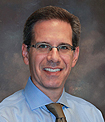
Louis S. Saco, MD, FACP, MBA received his medical degree from Georgetown University Medical School in Washington, DC. He went on to complete an Internship and Residency in Internal Medicine at Georgetown University Hospital in Washington, DC and a Gastroenterology Fellowship at the University of North Carolina School of Medicine in Chapel Hill, NC.
 
Dr. Saco is the team physician for the Detroit Tigers Spring Training. He is a member of the Alpha Omega Alpha Medical Honor Society, American Society for Gastrointestinal Endoscopy, American College of Physician Executives, American College of Sports Medicine, American Medical Association, Florida Gastroenterology Society, Florida Medical Association, Polk County Medical Association, and the Major League Baseball Team Physicians Society. He is also an assistant professor at the University of South Florida College of Medicine.
 
Dr. Saco is a fulltime gastroenterologist with the Watson Clinic and has been the CEO-Chairman of the Board of the Watson Clinic since 2002. He is triple board-certified in Internal Medicine, Gastroenterology and Managed Care Medicine.
 
Dr. Saco is well-known as a regional authority on all gastrointestinal diseases and intestinal cancer screening. He is highly trained in state-of-the-art gastroenterology procedures including:
  • High Definition Colonoscopy with particular emphasis on detection and removal of all colon polyps including right-sided flat polyps.
  • Upper Endoscopy.
  • Small Intestinal Enteroscopy.
  • ERCP.
  • Pillcam-Capsule Endoscopy.
He is the author of numerous publications.
 
Dr. Saco has been awarded the designation as one of America's Top Doctors in Gastroenterology by the Consumers Research Council every year since the award was first originated.


Dr. Joseph S. Cody, MD
 is double board-certified, with certifications in both Gastroenterology and Internal Medicine. He completed his undergraduate studies at the University of South Florida, where he also completed his medical school training. He then went on to complete an Internal Medicine residency at the University of South Florida, serving as Chief Resident of Internal Medicine. Following his board certification in Internal Medicine, he completed an advanced subspecialty residency in Gastroenterology. This was also at the University of South Florida, with particular attention to advanced procedures. He obtained board certification in Gastroenterology following completion of his fellowship.
 
After completion of his residency and fellowship training Dr. Cody relocated back to his home state of Massachusetts to become an Academic Attending. He was an Assistant Professor of Medicine with Tufts University Medical School Western campus, Baystate Medical Center. While there, his department served as the tertiary referral center for all of western Massachusetts, and provided advanced procedures for a variety of patients. In addition to a plethora of clinical activities, his duties included education of Internal Medicine, and surgery residents, as well as medical students. He served as Director of Medical Education for the department of Gastroenterology, and also Director of Gastrointestinal Endoscopy. He was a member of research team that was investigating Natural Orifice Transluminal Endoscopic Surgery, as well as studies involving inflammatory bowel disease, and numerous case studies.
 
Dr. Cody then relocated to Florida and joined Watson Clinic in 2007. He has been active in educational activities for the community through the Watson Clinic Foundation. He is also an Assistant Professor of Medicine with the University of South Florida College of Medicine. He is the member of numerous medical societies including, the American College of Gastroenterology, American Gastroenterology Society and American Society for Gastrointestinal Endoscopy.
 
Primary Areas of Expertise:
  • Diseases of Pancreas, and biliary tract including bile and pancreatic duct strictures, Sphincter and Oddi dysfunction, pancreatitis, gallstone disease, and cancers of the biliary tree and pancreas
  • Inflammatory bowel diseases including Crohn’s disease, Ulcerative Colitis, and Microscopic Colitis. This involves diagnosis, and management with a variety of methods and medications including biological therapies.
  • General Gastroenterology, which includes diagnosis and management of a variety diseases of the gastrointestinal system.
Endoscopic Procedures Performed:
Dr. Cody performs all of his procedures at Lakeland Surgical & Diagnostic Center or Lakeland Regional Medical Center.
  • Diagnostic and Therapeutic Upper endoscopy including Barrx HALO ablation of Barrett’s esophagus, esophageal stents, and endoscopic mucosal resection.
  • Diagnostic and Therapeutic Colonoscopy including removal of colonic polyps and other lesions
  • Single Balloon Enteroscopy with therapeutic intervention as needed
  • Endoscopic Retrograde Cholangiopancreatography, including use of the Spyglass direct cholangioscopy system.
  • Diagnostic and Therapeutic Endosonography of the upper and lower gastrointestinal tract
  • Wireless Capsule Endoscopy (Pillcam for diagnostic small intestinal endoscopy)
 

Victor C. Nwakakwa, MD, MRCP (UK) is double board-certified in the medical specialties of Gastroenterology and Internal Medicine. He obtained his medical degree from The University of Ibadan Nigeria in 1983. He then went on to complete an Internal Medicine Residency program in the United Kingdom; where he obtained the MRCP postgraduate diploma. Following this, he completed a Gastroenterology Fellowship Program at The Wythenshawe Teaching Hospital in Manchester, UK before moving to the United States.
 
Here in the US, Dr. Nwakakwa obtained additional medical training as follows: Internship and Residency in Internal Medicine at Hahnemann University Hospital, Philadelphia; Fellowship in Gastroenterology at Georgetown University Hospital, Washington D.C. He then worked as a Clinical Instructor in Gastroenterology at The University of Virginia Medical Center, Charlottesville, Virginia for a year before joining Watson Clinic in August of 2002. Dr. Nwakakwa is fully trained in and practices all aspects of the Gastroenterology and Hepatology subspecialty. He performs many Gastroenterology procedures including routine ones such as colonoscopy, upper endoscopy, Gastrostomy placement, balloon enteroscopy and capsule endoscopy. In addition, he performs advanced procedures such as Endoscopic Retrograde Cholangio Pancreatography (ERCP) and Spyglass cholangioscopy used for diagnosing and treating pancreatobiliary disorders, Endoscopic Ultra-Sound (EUS) with fine needle aspiration used for cancer staging and diagnosis of lesions in the Gastrointestinal tract, as well as adjacent extraluminal lesions present in the chest cavity and abdomen including the pancreas, Intraductal ultrasound as an adjunct in the diagnosis of biliary tumors, Endoscopic mucosal resection (EMR) for the treatment of small mucosal lesions, and Barrx procedure for the ablation of Barrett's esophagus when appropriately indicated.
 
Dr. Nwakakwa is a member of the American College of Gastroenterology and the American Gastroenterology Association. He has published several articles in medical journals and has co-authored chapters in various Gastroenterology textbooks.


Ugo C. Nzeako, MD, MPH
 is a Mayo Clinic trained gastroenterologist and hepatologist. He is double board-certified in the medical specialties of Gastroenterology and Internal Medicine. Dr. Nzeako has clinical and research experience in Gastroenterology, and general Internal Medicine. He has published several peer-reviewed papers and clinical reviews in his field, in highly regarded medical journals. He has also published several clinical articles, by invitation, in non-peer reviewed medical journals.
 
Since completing medical school in 1987 at the University of Nigeria, Dr. Nzeako pursued and received training in broad areas of medicine. After an internship and three years working as a family practitioner, Dr. Nzeako was accepted to the University of Sydney in Australia, where he studied and earned a Master of Public Health degree. He briefly took a position as an Associate Lecturer at the University of Sydney, tutoring new Masters degree students in a subject known as Demography, while he completed his Master of Public Health thesis.
 
After completing his Masters degree, Dr. Nzeako was accepted to the Hepatic Pathology Department of the Armed Forces Institute of Pathology, Washington, D.C., first as a postdoctoral trainee in liver pathology, then as a Callendar-Binford Research Fellow in liver and gastrointestinal pathology. After completing that fellowship, Dr. Nzeako went on to the University of Connecticut where he underwent specialty training in Internal Medicine. He earned Board Certification in Internal Medicine. Subsequently, he was accepted as a Gastroenterology Fellow at the Mayo Clinic in Rochester, Minnesota and went on to earn a subspecialty Board Certification in Gastroenterology. Dr. Nzeako was also a Clinical Instructor of Medicine at Mayo Medical School from 2001 to 2002.
 
Dr. Nzeako has been repeatedly named as one of "America's Top Physicians" in the field of Gastroenterology, by the Consumers Research Council of America, every year since 2004.
 
He joined Watson Clinic in August 2002.
 
Areas of Expertise:
  • General gastroenterology - the evaluation and treatment of diseases of the gastrointestinal system. This includes most ailments affecting the esophagus, stomach, small intestine, and large intestine (colon).
  • Hepatology - the evaluation and treatment of diseases of the liver. This includes hepatitis virus infections, abnormally high liver enzymes on blood tests, inherited diseases of the liver, and autoimmune diseases of the liver.
  • Capsule Endoscopy (Pillcam testing) – having the patient swallow a pill which has a camera built into it, then reviewing and interpreting the pictures acquired by the camera as the pill passes through the small intestine.
  • Endoscopic procedures of the intestinal system - passing a thin tube with a built-in camera into the intestinal tract, for the purpose of investigation and/or treatment of intestinal diseases. Details given below.
Endoscopic Procedures Performed:
  • Upper endoscopy (also known as EGD or esophagogastroduodenoscopy)
  • Colonoscopy and removal of colon polyps
  • Single balloon enteroscopy
  • Endoscopic retrograde cholangiopancreaticography (also know by its abbreviation, ERCP)
  • Capsule endoscopy (also known as Pillcam testing)
  • 48-hour Bravo pH testing
Selected publications by Dr. Nzeako.


Joffre R. Rivera, MD 
is double board-certified in the medical specialties of Gastroenterology and Internal Medicine. After graduating medical school with honors from the University of Puerto Rico, Dr. Rivera completed his training in Internal Medicine and Gastroenterology at the University of South Florida. During his fellowship in Gastroenterology, Dr. Rivera trained in the field of Endoscopic ultrasonography at the Moffitt Cancer Center. He has participated in several studies and published several abstracts in the areas of capsule endoscopy, gastrointestinal bleeding and esophageal stenting.
 
Since completing his training, Dr. Rivera has kept an appointment as an assistant associate professor of medicine with the University of South Florida, and currently participates in the teaching of medical students at his clinic. He is on the speaker board for Proctor and Gamble Pharmaceuticals, American Cancer Society and The Watson Clinic Foundation. He is on staff at Lakeland Regional Medical Center.
 
Dr. Rivera is an active member of the American Medical Association, the Florida Medical Association, Polk County Medical Association, American College of Physicians, American College of Gastroenterology, American Society of Gastrointestinal Endoscopy, American Gastroenterology Association and Pan-American Medical Association.
 
Dr. Rivera practices general gastroenterology with interest in pancreatic and biliary diseases, gastrointestinal bleeding, colon cancer screening, treatment and evaluation of reflux disorder as well as inflammatory bowel disease (Crohn's and Ulcerative Colitis). He performs general endoscopy (esophago-gastro-dudenoscopy and colonoscopy) as well as interventional/therapeutic endoscopy including Endoscopic retrograde cholangiopancreatogram, cholangioscopy (Spy Glass), endoscopic ultrasonography with needle biopsy, small bowel enteroscopy, capsule endoscopy, barrx procedure for the treatment of Barrett's and Bravo Ph studies.
 
Dr. Rivera is fluent in both English and Spanish. He joined Watson Clinic’s Gastroenterology team in July 2007.
 

Physicians

Joseph S. Cody, MD
Victor C. Nwakakwa, MD
Ugo C. Nzeako, MD, MPH
Joffre R. Rivera, MD
Louis S. Saco, MD, FACP, MBA, CEO/Chairman of the Board

Locations

Watson Clinic Main
1600 Lakeland Hills Blvd.
Lakeland, FL 33805

Please call 863-680-7490 to schedule an appointment.